On Live Music | Mont Mitchell
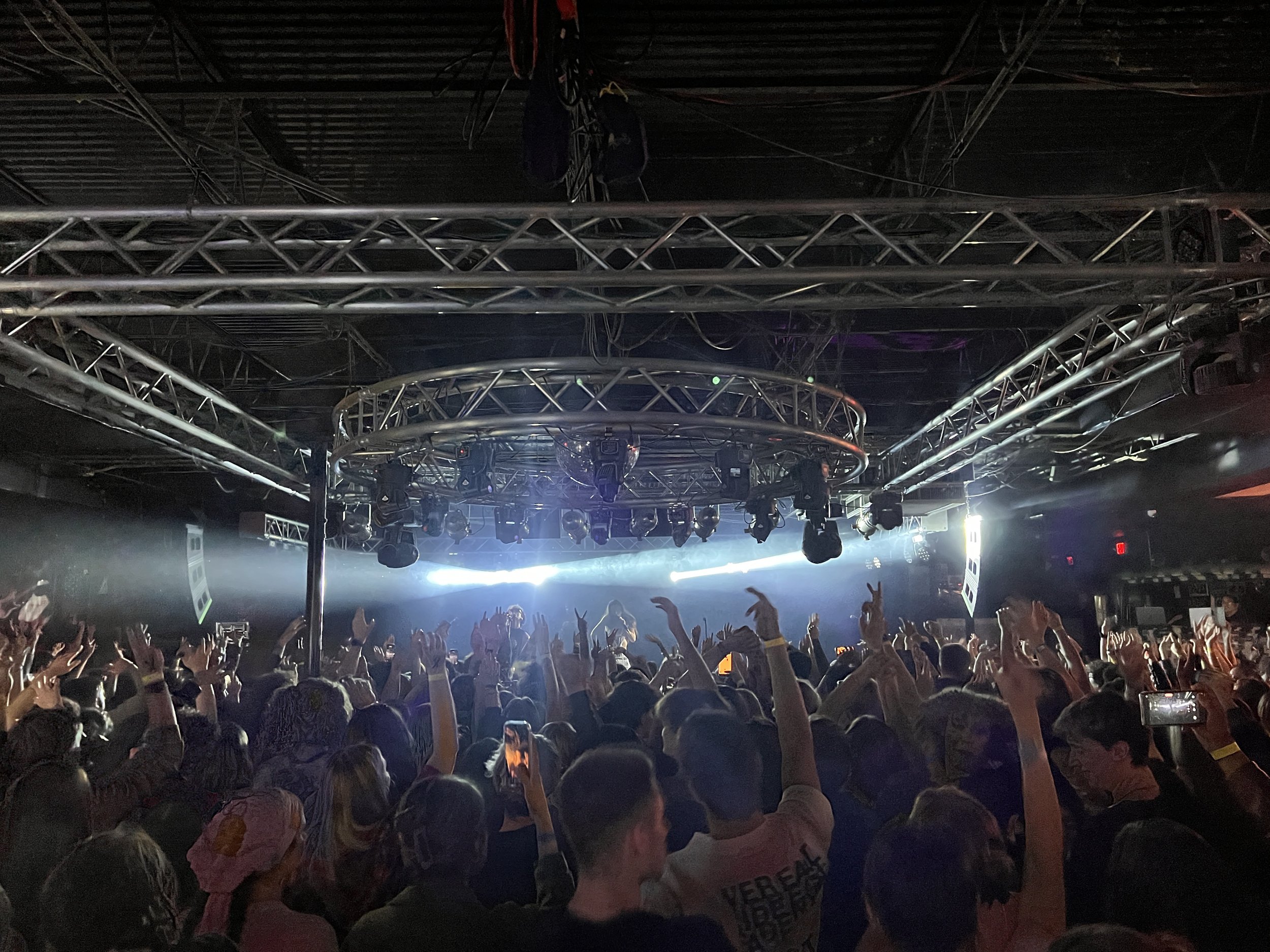
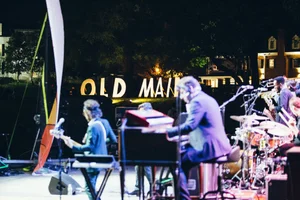
Photo by Mont Mitchell
In the spirit of all our thoughts, worries, and digital feeds being focused on the current wave of artificial intelligence, I see a future to be true in which human connection becomes one of the greatest desires of civilization. There is something very cyclical about this, so in the same vein, I present a piece on why live music is one of the deepest interpretations of human connection and its larger benefits on life and society.
To begin, I wondered what is behind these overwhelming feelings of joy that many of us experience at concerts. Emile Durkheim (1858-1917), often known as the father of Sociology, coined the term “Collective Effervescence” in 1912. He describes it as a group experience of intense effect, a feeling of being “swept away”, “becoming one with the crowd,” and is often tied to an experience of “the sacred.” It’s a moment of intense joy that is shared with everyone around you. A collective joy as Brene Brown describes it, where people feel true belonging. On a cellular level, there’s an increase in oxytocin in our bloodstream, a bonding hormone, when we attend a concert. This neurotransmitter is released, enhancing our sense of social connection. As we move together to song, we are engaging in neural circuits that involve bodily coordination, empathy, and social prediction - reinforcing the feeling of true belonging to a group (Fleming, 2025). Adam Grant, an esteemed organizational psychologist and best-selling author, adds, “Joy shared is joy sustained.” In a society that has seen the lulls of life without human connection through the lens of Covid, we value belonging and human connection greater than ever before.
As aforementioned, live music events have the power to bring people together. In the same spirit, it has the power to move mountains politically and light fire to economies. I recently came across the legend of Fela Aníkúlápó Kuti (1938-1997), a Nigerian musician and political activist, who through his music and club inspired resistance against a brutal dictatorship. To set the scene, every night at his club, the Shrine, in Lagos, the crowds would be lined up to get into the beating heart of the city. The rhythmic afrobeat could be heard for miles from the open air club. He begins the set with 30 minutes of a circular rhythm without any lyrics. The band will keep this tight beat until the audience reaches that feeling mentioned above, becoming one with the crowd and swept away in the moment. At this point, the attendees’ subconscious walls would be broken down. When Fela comes in singing, the lyrics sink into their conscious minds. He would sing of the political corruption happening in Lagos, informing people of world news that the government had hidden. He allowed the people to wake up and see what was being done to them by the government. Fela saw live music as a tool for movement. His best-known hits - Zombie, Water No Get Enemy, and Expensive Shit - are still symbols of hope in Nigeria and are well known across the globe. Other live music events that come to mind bearing political or humanitarian action include Wattstax ‘72, Live Aid ‘85, and Woodstock ‘69.
Live Music also has the ability to fuel economic activity and growth. In a report done by the National Independent Venue Association (NIVA), independent venues across the country reported a $153.1 billion total economic output & supported 909,000 jobs, which is comparable to the entire annual economic output and workforce of a major U.S. city. The impact doesn’t end there, as $10.62 billion in off-site tourism spending was reported, turning a single concert ticket into a night that supports the entire community’s economy. With an $86.2 billion contribution to the U.S. GDP, independent music venues rival entire national industries, underscoring their major economic force. And this report is only from the independent sector, as Live Nation reports several billion annually from its monopolistic flywheel business model. A well-loved example, Taylor Swift’s Eras tour, was reported to be one of the highest grossing tours of all time. In a study done by economists christened, “Swifteconomics”, the tour reported the U.S. dates alone sparked 4.6 Billion in consumer spending, packing hotels, busying shops, and filling tables across cities. (Archuleta & Anderson, 2023) Beyond purely economic benefit, we see communities come together around their local venues, serving as hubs for connection and relief. In the aftermath of Hurricane Helene, The Orange Peel, a legendary Ashville, NC venue, became a hub for supply and relief, providing food, water, and blankets to the community.
In review, we explored how live music fosters human connection through collective effervescence and a deepened sense of belonging, while also being a powerful force politically and economically. Fela showed us how live music can be a tool for political awakening, and the NIVA study illuminated that independent venues form the backbone of the live entertainment industry and act as community hubs, strengthening human connection at every step of the way. And as for me, music - more deeply live music – has always been an escape from the worries of this life. Or maybe it’s not an escape, but an entrance into the deeper conscious of what it means to be human. So much of human connection can be seen through live music – singing, dancing, standing shoulder to shoulder with a total stranger but yet someone you already know well just by attending the same show, sharing a moment that dissolves the distance between you. Some of my best memories live in those spaces. So, I implore you to get out there and embrace human connection.
If interested in more about Fela, check out the podcast below:
https://podcasts.apple.com/us/podcast/fela-kuti-fear-no-man/id1835735529
If interested in NIVA’s report, you can access it below:
https://www.nivassoc.org/stateoflive
Other sources:
https://time.com/7310051/science-obsessed-stadium-concerts/
https://www.commonsenseinstituteus.org/colorado/research/jobs-and-our-economy/swiftonomics-eras-tour-impact-on-colorado
Written By: Mont Mitchell